Thermal print vs Digital print
—
Which should you choose?
Both print methods turn a pop-up tent into a branding tool — but they fit different situations. This guide helps you pick the right method for your needs, budget and lead time.
Two paths to the same goal — branding on the tent
A pop-up tent is one of the most effective advertising carriers at trade fairs, markets and events — but only when it has clear branding. The two most common ways to apply a logo and design to a tent are thermal print and digital print.
Both methods deliver a professional result, but they suit different situations. Thermal print is fast and economical for smaller graphics. Digital print is the full-surface solution when you want the tent to become a complete brand experience.
Below both methods are explained in detail — so you can choose the one that fits your needs.
Thermal print vs digital print — side by side
A precise comparison of features, use cases and lead times for both methods.
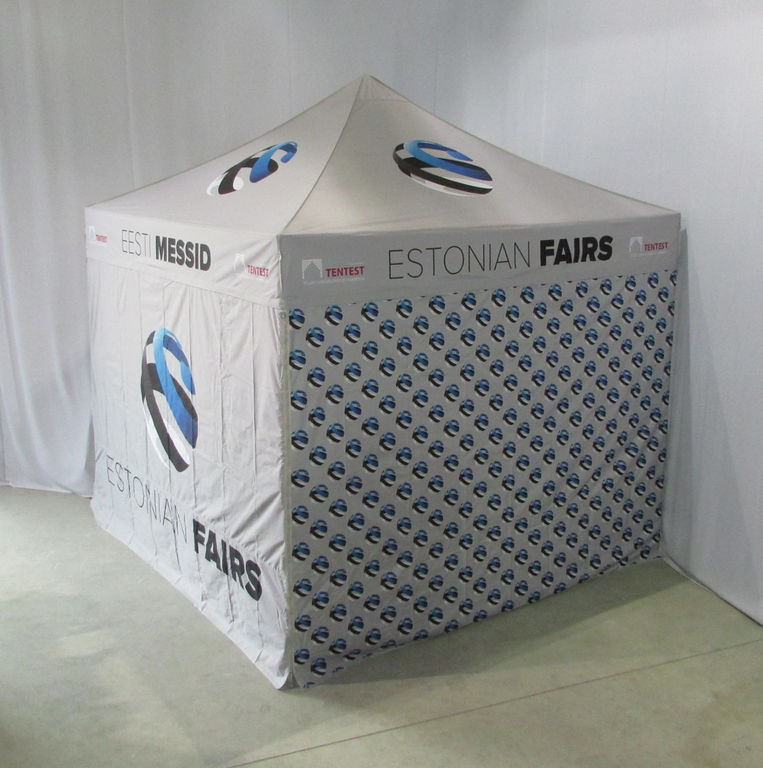
Thermal print suits smaller logos, text or graphics — for example printing a logo on the tent edge or roof. A fast, precise and economical method for logos, text and clear graphics.
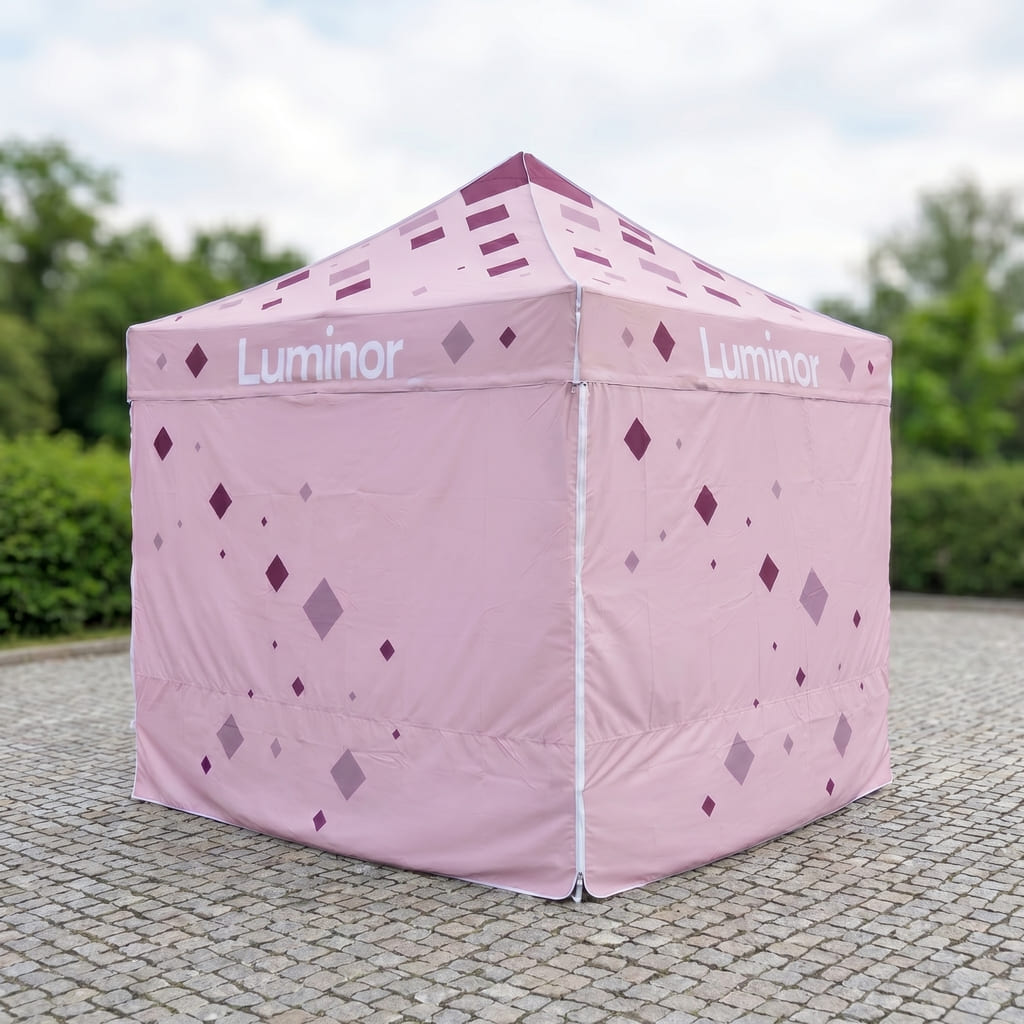
Digital four-colour CMYK printing allows applying your design across the entire tent surface — fabrics are printed edge to edge with sublimation. The best way to turn the product into complete branding.
Which print method should you choose?
Choose based on your needs, timeline and design complexity.
Fast result, simple design
Full branding, maximum visibility
Print results — real examples
See how both print methods look on real tents.

How to order a printed tent?
Choose tent and print method
Pick a pop-up tent model and decide which print method you want. We can also help during a consultation.
Send the artwork
For thermal print: logo in vector format (AI, EPS, PDF). For digital print: full design with background, min 150 dpi.
Approve the print proof
We send a digital preview for approval. After confirmation the order goes into production.
Delivery
Thermal print 3–5 working days, digital print 3–4 weeks. We deliver to your chosen address.
Frequently asked questions
Is thermal print durable?
Yes — thermal print is heat-bonded to the fabric and does not come off in normal use. Avoid abrasive cleaners on printed surfaces. If the fabric needs washing, do it carefully by hand with cold water.
What format does the logo need to be in for printing?
Thermal print: Logo in vector format — AI, EPS or PDF. Vector format ensures a sharp result at any size. Digital print: Full design at min 150 dpi in the recommended print-cut size. We accept PSD, PDF and AI formats.
Can digital print only be done on new tents?
Digital print is done on new fabrics — the roof cover and walls are printed with sublimation before sewing. On an existing tent you can use thermal print if the edge is in good condition and the material is suitable.
Can I order print only on the roof, not the walls?
Yes — both thermal and digital print can be ordered for the roof only. Separate wall-fabric printing is also possible. The most requested solution is roof + front wall fabric with a logo.
How many colours fit under thermal print?
Thermal print allows accurate, high-quality CMYK printing for logos, text and clear graphics. For very complex photorealistic images, smooth gradients and full-surface designs, digital print is the better choice.
Does print quality differ significantly between thermal and digital?
Both methods deliver a professional result in their intended use. Digital print with sublimation gives richer colour saturation and allows transitions, shading and photorealistic imagery — which thermal print does not.
Ready to brand your tent?
Ask for a quote